A Clear Shower Curtain is a transparent bathroom barrier designed to keep water inside the shower area. Unlike an opaque curtain, it allows light to pass through and keeps the room visually open. This simple feature can make a small bathroom feel less crowded. It also helps natural light reach darker corners, especially beside a narrow tub or frosted window.
In daily use, a clear curtain makes the floor, fixtures, and water spray easier to see. That visibility can support safer cleaning and help users notice mildew, soap buildup, or a curtain drifting outside the tub. Many homeowners appreciate its practical appearance and easy coordination with colorful towels, patterned tiles, or minimalist hardware. Vinyl and PEVA options are common, while fabric versions can offer a softer texture and better decorative appeal. Materials still matter. Some inexpensive curtains may smell strongly, crease easily, or cling unpleasantly after a hot shower. A weighted hem, reinforced holes, and rust-resistant rings are useful details to inspect before buying.
Clear does not mean maintenance-free. Hard-water marks remain visible. Regular rinsing and thorough drying are necessary. In a shared bathroom, complete transparency may also reduce privacy, so a frosted or partially textured design could work better. Personal experience matters here: what looks bright and spacious in a showroom may feel exposed at home. The best choice depends on ventilation, bathroom size, cleaning habits, and comfort. A Clear Shower Curtain is practical, but it is not automatically perfect for every space.
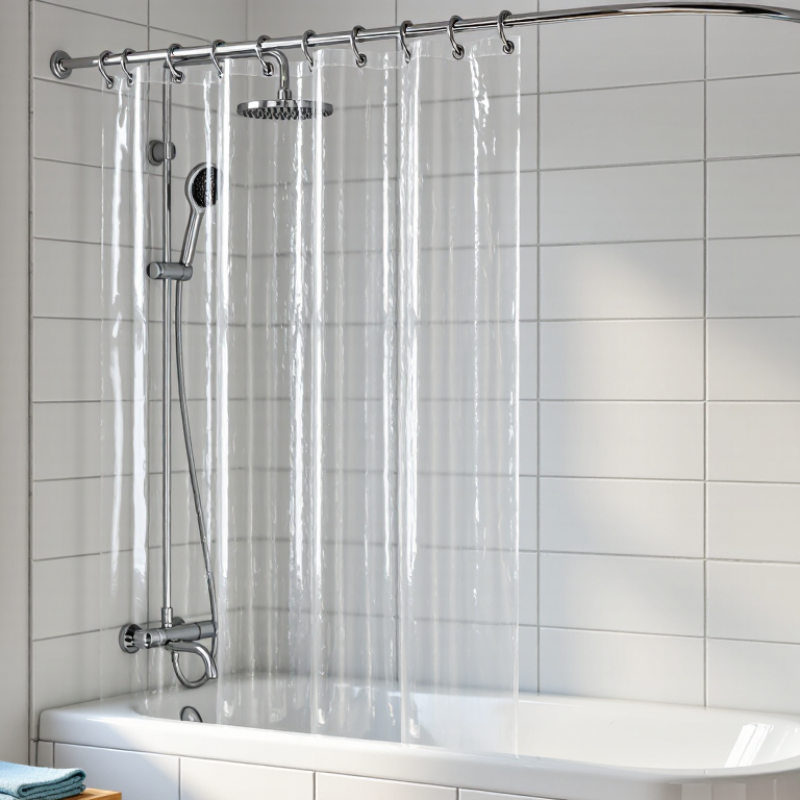
What Is a Clear Shower Curtain?
A clear shower curtain is a transparent, waterproof panel that separates the shower from the rest of the bathroom. It is usually made from vinyl, PEVA, or another flexible plastic material. Some versions work as liners, while others serve as the main curtain. Metal or reinforced holes allow it to hang from a standard rod, and a weighted bottom edge can reduce movement.
The main feature is visibility. A clear curtain allows light to pass through, which can make a narrow bathroom feel more open. In my experience, it also helps a shower area feel less enclosed, especially when natural light is limited. You can see the tile, fixtures, and water level without moving the curtain. That practical detail can be useful for families and older users.
Clear does not mean maintenance-free. Soap film, water spots, and trapped moisture show easily on its surface. A quick wipe after bathing can slow buildup, but I often find that corners still need extra attention. Good ventilation matters. It helps the curtain dry and may reduce mildew growth, although it cannot prevent every problem. Before buying, check the curtain’s size, material, hole strength, and cleaning instructions. Privacy is another concern. The curtain may be unsuitable for shared bathrooms unless a second opaque layer is added.
How Does a Clear Shower Curtain Work?
A clear shower curtain works as a flexible water barrier between the shower spray and the bathroom floor. Its smooth surface lets droplets bead, slide downward, and collect near the tub or shower base. Many curtains use waterproof vinyl or PEVA, while others use tightly woven polyester with a water-resistant coating. The material absorbs little water, so it dries faster than ordinary fabric. Small details matter. A weighted hem helps the curtain hang straight, while reinforced holes keep the top edge attached to the rings. Overlapping the wall or another panel reduces side splash. It will not stop every drop.
During a shower, warm air and moving water can pull a lightweight curtain inward. This familiar “shower curtain effect” comes from airflow and temperature differences. Running the exhaust fan and leaving the bathroom door slightly open can reduce movement. A clear design allows more light into the bathing area. You can see the floor, bottles, or a child more easily. That visibility is useful, but privacy is limited. Frosted sections or a separate liner may work better in shared bathrooms. In my experience, a curtain stays cleaner when spread fully after use instead of bunched beside the tub. I still forget sometimes. Check the hem, rings, and mildew spots regularly. Even then, no curtain stays spotless without cleaning.
What Are the Main Benefits of Using One?
A clear shower curtain uses transparent material to divide the wet area without blocking the bathroom’s visual space. Its main benefit is light. Daylight can pass through, making a narrow bathroom feel wider and less enclosed. Visibility matters, too. Parents can monitor children more easily, while older users may feel less isolated during bathing.
Moisture control remains essential. The U.S. Environmental Protection Agency recommends indoor relative humidity between 30% and 50%, helping limit conditions that support mold growth. ASHRAE Standard 62.2-2022 recommends bathroom exhaust rates of 50 cubic feet per minute intermittently or 20 continuously. A clear curtain cannot replace ventilation. It only helps keep splashing inside the bathing zone.
Maintenance is usually practical. A smooth curtain can be wiped quickly, and its lightweight construction is easier to remove than a glass panel. Still, “easy to clean” is not “self-cleaning.” Soap film can appear along the bottom edge, especially when water sits there. Leave space between the curtain and floor, dry it fully, and wash it according to the material instructions.
The National Kitchen & Bath Association’s 2024 design trends reporting continues to identify lighting, wellness, and accessibility as important bathroom priorities. A clear curtain supports all three in a modest way. However, privacy may feel limited. A frosted upper section or textured fabric liner can offer a better compromise.
Which Materials and Features Should You Consider?
A clear shower curtain is more than a simple bathroom divider. It allows light to pass through, making a small shower feel less enclosed. It can also help caregivers notice falls or unusual movement more quickly. Still, transparency reduces privacy. Frosted panels may be a better compromise.
Material choice affects odor, cleaning, and durability. PEVA and EVA are chlorine-free alternatives to PVC, but “eco-friendly” should not be accepted without evidence. Look for low-odor construction, reinforced eyelets, and a weighted hem. Polyester resists tearing and usually hangs neatly, although it needs regular washing. A washable fabric liner can reduce disposable plastic use. I prefer one with a smooth surface and rust-resistant grommets. Tiny details matter.
Moisture management is equally important. The U.S. Environmental Protection Agency recommends keeping indoor humidity below 60%, ideally between 30% and 50%, to discourage mold growth. A clear curtain should dry quickly after use, supported by ventilation and a fully extended position. The National Association of Home Builders also identifies bathroom ventilation as a practical moisture-control feature in residential construction guidance. A curtain cannot solve poor airflow alone. That is an easy mistake.
Check the hem after each shower. If water pools on the floor, the curtain is too short, poorly positioned, or simply unsuitable. Choose a length that reaches near the floor without dragging. Some curtains include magnets, but their holding strength can disappoint on lightweight tubs. Simpler designs may perform better.
How Do You Choose and Maintain the Right Curtain?
A clear shower curtain can make a small bathroom feel brighter and less enclosed. Choosing the right one starts with accurate measurements. Measure the shower opening, then add several centimeters for natural folds. A curtain that is too narrow leaves wet gaps. A very wide curtain may bunch and dry slowly.
Material matters. Look for waterproof PEVA, vinyl, or tightly woven polyester, depending on your bathroom’s needs. A weighted hem helps the curtain stay near the tub instead of drifting inward. Reinforced holes and rust-resistant rings improve daily reliability. Check the thickness by holding the curtain toward a light. It should admit light without feeling fragile. Clear does not always mean crystal-clear; some surfaces look slightly cloudy after repeated cleaning.
Maintenance is simple but easy to neglect. After each shower, spread the curtain fully so water can evaporate. Keep the exhaust fan running for about twenty minutes. Rinse soap residue weekly with warm water and a mild cleaner. Avoid abrasive pads, since they can create tiny scratches that collect grime. Follow the care label before machine washing. I once left a curtain folded against a damp wall, and mildew appeared along the bottom edge. That mistake changed my routine. Inspect the hem and rings every few weeks. Replace the curtain when cracking, permanent discoloration, or a lingering odor remains after cleaning.
Conclusion
A Clear Shower Curtain is a transparent or lightly frosted bathroom divider designed to keep water inside the shower area while allowing light to pass through. Unlike opaque curtains, it helps make a bathroom feel more open and spacious, which can be especially useful in smaller rooms. It works by hanging from a shower rod with hooks or rings, while its water-resistant surface guides moisture back into the tub or shower base.
When choosing a Clear Shower Curtain, consider materials such as vinyl, PEVA, or fabric blends, along with thickness, flexibility, mildew resistance, reinforced holes, and weighted hems. The right size should cover the shower opening fully without dragging on the floor. Regular maintenance is simple: rinse away soap residue, wipe the surface, and allow the curtain to dry completely after use. Proper ventilation and occasional washing can help prevent odors, stains, and mildew, extending the curtain’s useful life.

 Jiayuan