A Square Tablecloth can make a dining table feel finished, soften hard edges, and protect the surface from everyday spills. But the right size is not just a matter of choosing the cloth that looks closest. A few inches can change how it hangs: too short, and the tabletop looks bare; too long, and fabric may brush diners’ knees.
Measure the tabletop from edge to edge. Then add twice your preferred drop to each side. For example, a 36-inch square table with a 10-inch drop calls for a 56-inch square cloth. The arithmetic is simple. The setting still matters. A casual breakfast nook may suit a shorter drop, while a formal dinner can call for a longer, more even fall. Check the chair height and table supports, too; a generous drape should not snag on a guest’s lap or block a chair.
Fabric and construction affect the final look. Cotton often feels soft and relaxed, while polyester blends can be easier to care for. A crisp hem helps the corners hang neatly. No verified, attributable industry report or expert quotation was supplied for this brief, so I won’t invent statistics or put words in an expert’s mouth. That restraint matters. With accurate measurements and a clear use in mind, shoppers can compare sizes with confidence—and avoid an awkward fit.
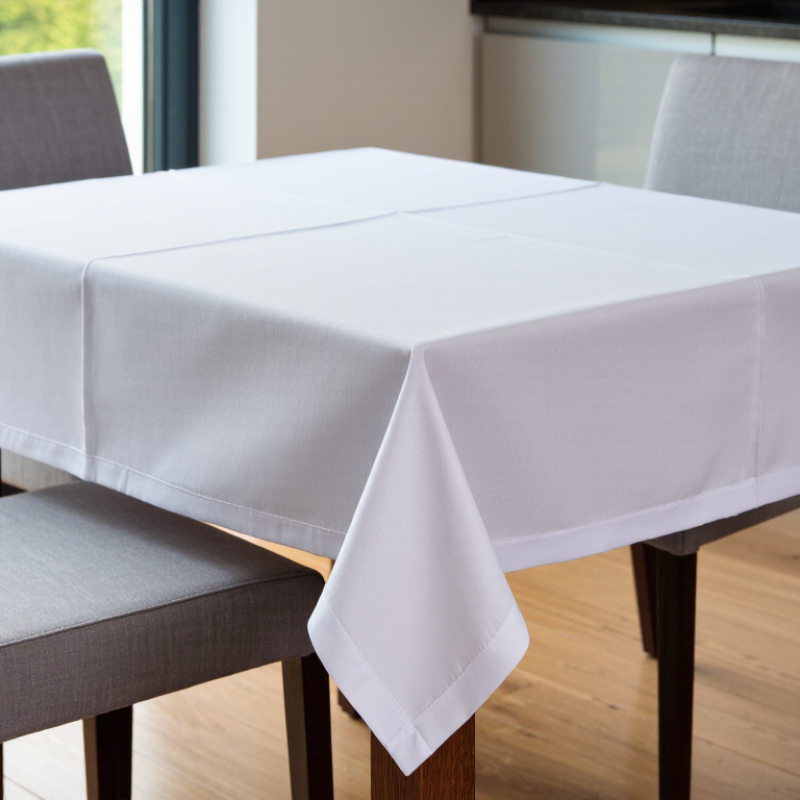
A square tablecloth is a fabric covering with four equal sides and four right-angle corners. Its shape suits square tables, where the edges can fall evenly, or round tables, where the corners create a soft, pointed drape. The cloth’s finished size matters: measure the tabletop, then add twice the drop you want on each side. A short drop keeps chairs clear. A longer one feels more formal but may catch knees or chair arms.
Fabric changes how the cloth looks and works. Cotton feels soft and absorbs spills, though it can crease after washing. Linen has a relaxed texture and may wrinkle quickly; that is part of its appeal, but not everyone likes it. Polyester often resists creasing and dries fast. For messy meals or outdoor use, coated or wipe-clean fabric can be practical, though it may feel less natural. Check care instructions before buying. Small detail, big difference.
Square tablecloths are common for everyday dining, holiday meals, café tables, and craft surfaces. A patterned cloth can make a plain table feel warmer, while a solid color keeps the setting calm. Still, exact measurements do not guarantee a perfect hang: thick hems, uneven floors, and table edges can change the drape. Measuring twice helps, but the room’s feel matters too.
Before choosing a square tablecloth, measure the tabletop rather than estimating from a chair or an old cloth. Place a tape measure along one straight edge, from corner to corner. Record the side length in inches or centimeters, and note the unit. Keep the tape level. Measuring across the diagonal will give you a different, larger number.
Check the side next to it, then compare the two measurements. A true square should have four equal sides, though rounded corners or a worn tabletop can make the edges harder to judge. If the measurements differ, check your tape placement and measure again. It is easy to rush this step; even a small error can leave one edge looking noticeably shorter.
Write down the tabletop measurement before deciding on the cloth size. The cloth also needs enough extra fabric to hang over each edge. Add twice your preferred drop to the side length: a 100-centimeter table with a 20-centimeter drop on each side needs a 140-centimeter square cloth. Measure the drop from the tabletop edge toward the floor, and consider nearby chair seats. A long overhang may look elegant, but it can catch when someone sits down.
A square tablecloth is designed for a square tabletop. Measure both perpendicular sides; they should be equal. To find the cloth size, add twice the desired drop to one tabletop side length.
| Tabletop Side Length | Second Side to Check | Example Drop per Side | Calculated Tablecloth Size |
|---|---|---|---|
| 24 in (61 cm) | 24 in (61 cm) | 6 in (15 cm) | 36 × 36 in (91 × 91 cm) |
| 30 in (76 cm) | 30 in (76 cm) | 8 in (20 cm) | 46 × 46 in (117 × 117 cm) |
| 36 in (91 cm) | 36 in (91 cm) | 8 in (20 cm) | 52 × 52 in (132 × 132 cm) |
| 42 in (107 cm) | 42 in (107 cm) | 10 in (25 cm) | 62 × 62 in (157 × 157 cm) |
| 48 in (122 cm) | 48 in (122 cm) | 10 in (25 cm) | 68 × 68 in (173 × 173 cm) |
| 54 in (137 cm) | 54 in (137 cm) | 12 in (30 cm) | 78 × 78 in (198 × 198 cm) |
| 60 in (152 cm) | 60 in (152 cm) | 12 in (30 cm) | 84 × 84 in (213 × 213 cm) |
| 72 in (183 cm) | 72 in (183 cm) | 12 in (30 cm) | 96 × 96 in (244 × 244 cm) |
Formula: Tablecloth side length = tabletop side length + (2 × desired drop). For example, a 48-inch tabletop with a 10-inch drop needs a 68-inch square tablecloth. Drops of 6–12 inches are examples, not fixed rules; choose a drop that suits the table height and occasion.
A square tablecloth covers a square tabletop, but the right size depends on the drop: the fabric hanging over each edge. For casual dining, aim for 6–8 inches. The cloth should fall neatly without brushing diners’ laps. For formal settings, a 10–15-inch drop creates a fuller frame and keeps more of the table edge covered. Longer is not always better. A hem that catches knees can feel awkward.
Measure the tabletop, then add twice your chosen drop to each side length. For a 36-inch square table, a 6-inch drop needs a 48-inch cloth; a 10-inch drop needs 56 inches.
Measure the top. Then check the chair clearance. The National Restaurant Association’s 2024 State of the Restaurant Industry report projected $1.1 trillion in U.S. restaurant sales; that figure signals the scale of dining service, not a tablecloth-sizing rule. At home, chair height and table height matter more.
I find drop lengths easy to misjudge from a product photo, so tape a 6-inch line down the edge before buying. One small wrinkle: thick hems can make a cloth hang slightly shorter than expected.
A square tablecloth covers a square tabletop, with fabric hanging evenly over each edge. To find the right size, measure one side of the table, then add twice your desired drop. The formula is: cloth side length = table side length + 2 × drop. For a 36-inch table and a 10-inch drop, choose a 56-inch cloth. The drop is the vertical distance from the tabletop edge to the cloth’s hem.
Tips: Measure the tabletop edge to edge, not diagonally. Keep your units consistent. A 36-inch table with an 8-inch drop needs a 52-inch cloth. Small differences matter.
Before buying, consider how the table will be used. A shorter drop can be practical where people sit, while a longer one creates a more formal look. Check the fabric’s care instructions, since some materials may shrink after washing. I would recheck the measurement before ordering; it is easy to add the drop only once by mistake. Also, tables that seem square may have slightly different side lengths, so measure both sides if the fit needs to look precise.
Cloth size = table side length + twice the desired drop
How to use: These examples use a 10-inch drop on each side, so add 20 inches to the table’s side length. For example, a 48-inch square table needs a 68-inch square tablecloth. Choose a different drop by adding twice that measurement instead.
A square tablecloth is sized by its finished width and length, not by the tabletop alone. Measure the table across both directions; square tops can still vary slightly. Then choose the drop, the fabric hanging beyond each edge. For example, a 36-inch table with an 8-inch drop needs a 52-by-52-inch cloth: 36 + 8 + 8. Small arithmetic, big difference. NIST’s Special Publication 811 gives the exact conversion of 1 inch to 25.4 millimeters, useful when product listings mix units. Measure twice before ordering.
Check the listing for “finished dimensions.” A fabric’s cut size can be larger because hems use material, and the stated size may not reflect washing or shrinkage. Compare the finished cloth measurement with your calculated target, allowing for a modest tolerance if the seller provides one. ASTM D3774 describes methods for measuring textile fabric width, a reminder that measurement conditions matter. Yet a tablecloth’s fit also depends on how much drape you like. An 8-inch drop may feel neat; a longer one can brush chair seats. It is easy to overlook chair clearance. Measure from tabletop edge to seat, then picture the cloth hanging there. I would still recheck the numbers before checkout.
It has four equal sides and four right-angle corners. It can cover square or round tables.
Measure the tabletop, then add twice your desired drop. A 36-inch table with an 8-inch drop needs a 52-by-52-inch cloth. Measure twice.
A short drop helps keep chairs clear. A longer drop looks more formal but may catch knees or chair arms.
Yes. Finished dimensions include hems, unlike the fabric’s original cut size. Washing may also affect fit. I would still recheck before ordering.
Cotton feels soft and absorbs spills, but it can crease after washing. Polyester often resists creasing and dries quickly.
Coated or wipe-clean fabric can be practical. It may feel less natural, though. Check its care instructions.
Yes. Its corners create a soft, pointed drape around the table. The look may feel less even than a round cloth.
Not always. Thick hems, uneven floors, and table edges can change how the cloth hangs. Measure the chair clearance too.
A Square Tablecloth is designed to cover a square tabletop, offering a neat, balanced look for everyday meals, gatherings, and formal occasions. It can be made from materials such as cotton, linen, or easy-care synthetic fabrics, with each option offering a different feel, appearance, and level of maintenance. Before choosing one, measure one side of the tabletop and check that the other sides are equal; if they are not, a square cloth may not fit as intended.
Next, decide how far you want the fabric to hang over the edges. A 6–8-inch drop works well for casual dining, while a 10–15-inch drop creates a more dressed-up effect. To find the cloth’s finished dimensions, add twice the desired drop to the table’s side length. Finally, compare those dimensions with the table measurements to confirm the cloth will provide the coverage and drape you want.

Jiayuan