What Are the Top Dining Room Tablecloth Trends?

Time:2026-10-10 Author:Sophia
0%

Dining room style is becoming softer, more practical, and more personal. A Dining Room Tablecloth now does more than protect wood from spills and scratches. It can shape the entire meal, from a quiet breakfast to a crowded holiday dinner. Current trends favor natural linen, washed cotton, relaxed checks, and earthy colors such as oat, olive, clay, and deep blue. These choices add texture without making the room feel overdecorated.

Performance fabrics are also gaining attention. Stain-resistant finishes, machine-washable blends, and heavier woven materials suit busy households. Still, product claims deserve careful checking. A fabric labeled “easy care” may resist one spill but show oil, wine, or candle wax. Read the care instructions before buying. Measure the tabletop, then allow a drop of 8 to 12 inches for balanced coverage. Too little looks accidental. Too much becomes inconvenient.

Layering creates another strong direction. A smaller patterned runner over a plain cloth can add contrast while keeping the setting controlled. Seasonal designs are useful, but they should not become disposable purchases. Reversible styles and durable fibers often offer better long-term value. I have found that real homes rarely look like showroom photographs. Chairs move, children pull corners, and guests leave crumbs. That is normal.

The best choice depends on daily habits, lighting, and cleaning expectations. Trends provide inspiration, not strict rules. Even a slightly imperfect cloth can feel right when it supports comfortable, memorable dining.
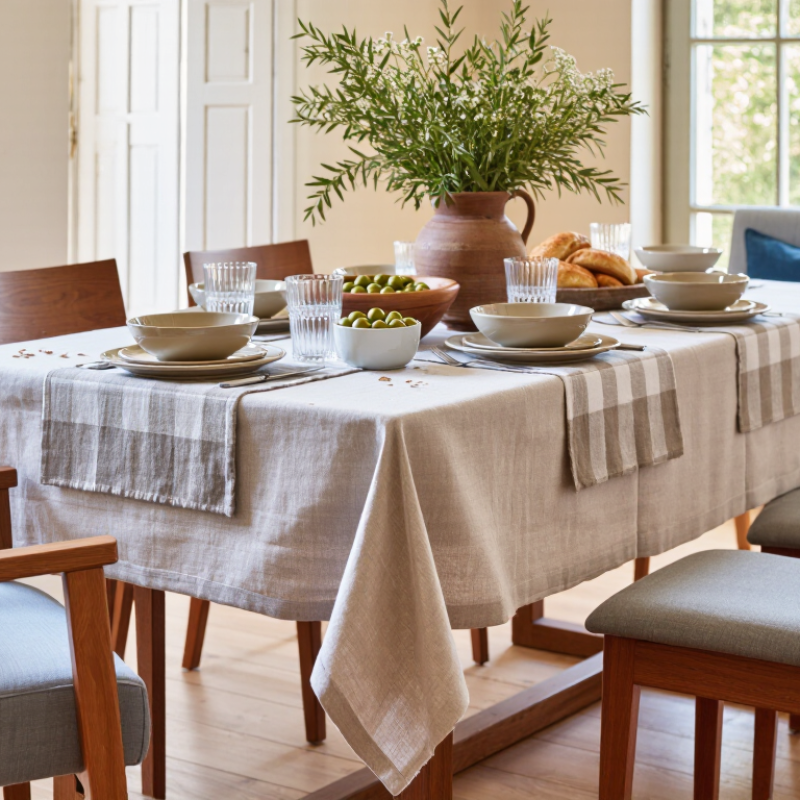
What Are the Top Dining Room Tablecloth Trends?

Market Scope: Home Décor’s 3.6% CAGR and the Tablecloth Segment

Dining room tablecloth trends now reflect wider changes in home décor. A projected 3.6% CAGR suggests steady market expansion, rather than a sudden boom. CAGR measures average annual growth over a defined period. This matters because gradual growth often rewards useful design, durable materials, and repeat household purchases. The tablecloth segment benefits from renewed interest in dining spaces, smaller celebrations, and flexible home styling.

Natural textures remain influential. Washed cotton, linen blends, and woven fibers create visible depth under warm lighting. Soft earth tones, muted blue, and olive green suit modern dining rooms without overwhelming the furniture. Subtle checks and narrow stripes add pattern while keeping plates and glassware noticeable. Many shoppers also prefer washable finishes, especially in homes with children or frequent guests.

Practicality leads.

However, market forecasts are not living rooms. A 3.6% growth rate cannot guarantee that every fashionable fabric will perform well. Some textured cloths wrinkle quickly, while coated surfaces may feel less comfortable. Measuring the table, checking care instructions, and testing color in daylight remain sensible steps. From a professional décor perspective, the strongest choices balance appearance, maintenance, and room scale. A dramatic print may look attractive online, yet seem crowded on a six-seat table. That mismatch deserves more attention.

Material Trends: Cotton, Linen, and Blends Through EPA Textile Data

Dining room tablecloth trends are moving toward natural texture, practical care, and longer use. Cotton remains a dependable choice because it feels soft, washes easily, and suits everyday meals. Linen brings visible slubs and a relaxed drape, especially across oak or stone tables. Blended fabrics offer another route. Cotton-polyester combinations usually wrinkle less and may resist repeated staining better.

EPA textile data adds necessary context. Its 2018 Municipal Solid Waste report recorded 17.2 million tons of textiles in the United States. Only about 2.5 million tons were recycled, representing roughly 14.7 percent. The report estimated that approximately 13.6 million tons went to landfills. These figures cover textiles broadly, not tablecloths alone. Still, they make durability a meaningful design trend, not merely a styling preference.

The data has a blind spot.

EPA does not separate cotton, linen, and blended table linens in its national waste tables. Therefore, claims about one fiber’s exact disposal rate require caution. Textile Exchange’s Materials Market Report 2024 estimated global fiber production at 124 million tonnes in 2023. Cotton represented about 22 percent, while polyester accounted for approximately 57 percent. For shoppers, the practical lesson is visible at the table: choose a tightly woven cotton cloth for frequent washing, linen for breathable texture, or a blend for busy households. Check the care label. A beautiful fabric that shrinks, pills, or needs constant replacement may not be the more responsible choice.

What Are the Top Dining Room Tablecloth Trends? - Material Trends: Cotton, Linen, and Blends Through EPA Textile Data

Material Typical Dining-Room Appeal Moisture Regain
(approx.)
Common Care Temperature Observed Trend End-of-Life Context
Cotton Soft hand, familiar texture, broad range of colors and prints About 8.5% Up to 60°C / 140°F
when care label permits
Everyday washable tablecloths, color layering, and casual dining settings Natural cellulose fiber; reuse and textile recycling are preferred before disposal
Linen Distinctive slub texture, breathable feel, relaxed and premium appearance About 12% Usually 30–40°C / 86–104°F Natural neutrals, visible texture, and intentionally relaxed or lightly wrinkled styling Natural bast fiber; long service life and repair or reuse can reduce disposal impacts
Cotton–Linen Blend Balances cotton softness with linen texture and drape Varies by ratio;
typically between the component fibers
Usually 30–40°C / 86–104°F Fast-growing choice for versatile table settings and lower-formality entertaining Two natural fibers can simplify fiber identification compared with multi-material blends
Cotton–Polyester Blend Lower wrinkling, dimensional stability, and practical daily use Depends on blend ratio;
lower than pure cotton as polyester content rises
Usually 30–40°C / 86–104°F Easy-care, stain-resistant-looking finishes, and banquet or high-use applications Mixed fibers may be more difficult to separate and recycle mechanically
All Textile Materials Performance and appearance should be balanced with durability and care needs Material-specific Follow the product care label Longer use, washing efficiency, repair, donation, and reuse are central sustainability themes EPA reported approximately 17.03 million U.S. tons of textiles generated in 2018; about 2.51 million tons were recycled, 3.21 million tons combusted with energy recovery, and 11.31 million tons landfilled
Data notes: Moisture-regain values are approximate standard textile-fiber reference values and can vary with test conditions and finishing. Care temperatures are general guidance; the manufacturer’s care label takes precedence. U.S. textile generation, recycling, combustion with energy recovery, and landfilling figures are from the U.S. Environmental Protection Agency’s 2018 municipal solid waste textile estimates. Material-specific textile waste figures are not separately reported in that EPA dataset.
Sources: U.S. Environmental Protection Agency, Facts and Figures about Materials, Wastes and Recycling: Textiles; standard textile-fiber moisture-regain reference data; general textile care guidance based on common fiber behavior.

Sustainable Choices: Recycled Fibers and 17.1 Million Tons of Textile Waste

What Are the Top Dining Room Tablecloth Trends?

Sustainable tablecloths are becoming more practical, not merely fashionable. The frequently cited U.S. estimate of 17.1 million tons of textile waste shows why material choices matter. Recycled cotton, polyester, and blended fibers can redirect discarded materials from disposal sites. They also create soft, durable surfaces for everyday dining.

Look for transparent fiber information and strong stitching around the hem. A recycled polyester cloth may resist spills, while recycled cotton often feels warmer and more natural. Check the care label before buying. Cold washing and air drying can reduce energy use, but stains may require extra attention.

That is the imperfect part.

Recycled fibers do not make a tablecloth impact-free. Manufacturing still uses water, energy, and chemicals. Some blended fabrics are also difficult to recycle later. A responsible choice considers durability, repairability, and actual use. A cloth used weekly for years may be better than a cheaper fabric replaced every season. Before purchasing, measure the table, inspect the weave, and choose a washable design that suits real household routines. A slightly wrinkled cloth may be acceptable when it lasts longer.

Design Trends: Color, Patterns, and Pantone’s 2024 Peach Fuzz

Dining room tablecloth trends are moving toward warmer color, tactile fabric, and patterns that feel lived-in rather than overly perfect. Pantone’s 2024 Color of the Year, Peach Fuzz, captures this shift with its soft, gentle orange tone. It brings warmth without overwhelming a room.

In my experience, Peach Fuzz works best with natural wood, cream dishes, and brushed metal cutlery. Linen or cotton-linen blends help the color appear relaxed instead of sugary. A muted peach cloth can soften strong daylight and make evening meals feel more intimate. It also photographs well, though lighting changes its appearance. Test a fabric beside your window first.

Patterns are becoming quieter but more expressive. Small checks, hand-drawn stripes, and scattered botanical shapes add character without hiding the table’s texture. Pairing a peach base with dusty blue or olive details can create useful contrast. Avoid matching every accessory too closely. The room may look coordinated, but not necessarily welcoming. I sometimes prefer one imperfect element, such as a slightly uneven stripe or a naturally wrinkled edge. It makes the setting feel personal.

Care still matters. Wash a sample before buying several meters, because some fabrics shrink or lose color. A practical tablecloth should tolerate regular meals, not only special occasions. A few visible creases are acceptable. They can even make the table feel more honest.

Buying Trends: Online Tablecloth Shopping and the U.S. Census E-Commerce Share

Online tablecloth shopping is changing how dining room trends reach American homes. Shoppers now compare colors, fabric weights, measurements, and care instructions before visiting a store. Neutral linen-look designs remain popular, while soft green, terracotta, and checked patterns add warmth. Textured surfaces also photograph well in product listings.

The U.S. Census Bureau’s quarterly e-commerce estimates show how much retail activity occurs online. However, these figures cover broad retail categories, not tablecloths alone. That distinction matters. A rising e-commerce share suggests stronger digital buying habits, but it cannot prove that every table-setting trend comes from online shoppers.

In my experience, customers often choose washable blends for everyday meals and heavier fabrics for formal dining. Product images help, but they can hide thin fabric or inaccurate color. Read recent reviews carefully. Check the table dimensions, drop length, and washing method before ordering. A 60-inch tablecloth may look generous online but feel short on a larger table.

Many buyers also seek multi-season pieces. Cream, muted blue, and small geometric patterns can work beyond one holiday. Yet trend reports sometimes simplify real homes. Families may prefer practical stains-resistant materials over fashionable textures. I have also found that “natural” fabric descriptions can create confusion when synthetic fibers are included. Better product details would make online tablecloth shopping more trustworthy.

What Are the Top Dining Room Tablecloth Trends?

Online purchasing is an increasingly important channel for home furnishings, including dining room tablecloths. The chart shows the annual share of total U.S. retail sales generated through e-commerce.

Source: U.S. Census Bureau, Annual Retail Trade Survey and quarterly e-commerce estimates. Values represent e-commerce as a percentage of total U.S. retail sales.

FAQS

Why are warmer tablecloth colors becoming popular?

Warm shades make dining rooms feel softer and more inviting. Muted peach adds gentle orange without overwhelming the space.

Which materials work well with a soft peach tablecloth?

Linen and cotton-linen blends create a relaxed, tactile appearance. Natural wood, cream dishes, and brushed metal cutlery complement it nicely.

How can lighting change a tablecloth’s color?

Daylight may make peach look brighter, while evening light can make it appear deeper. Test the fabric beside your window first.

Which patterns add character without making the table look busy?

Small checks, hand-drawn stripes, and scattered botanical shapes work well. Quiet patterns reveal the fabric’s texture.

What colors can balance a peach tablecloth?

Dusty blue and olive details create useful contrast. Avoid matching every accessory too closely. Perfect coordination can feel cold.

Are wrinkles acceptable on a dining tablecloth?

Yes, a few creases can make the setting feel personal and honest. I sometimes prefer a naturally wrinkled edge.

What should shoppers check before ordering a tablecloth online?

Check table dimensions, drop length, fabric weight, color details, and washing instructions. Product photos can hide thin fabric.

Should buyers wash a sample before purchasing several meters?

Yes, washing a sample may reveal shrinkage or fading. It is a small step, but skipping it can become expensive.

Are fashionable fabrics always practical for everyday meals?

Not always. Washable blends may suit regular meals better than delicate textures. Real homes often need stain resistance more than trendiness.

Can online shopping trends prove why people choose certain tablecloth styles?

No, broad online retail data cannot prove tablecloth preferences alone. It suggests stronger digital buying habits, but the conclusion remains incomplete.

Conclusion

The Dining Room Tablecloth market is evolving alongside the wider home décor industry, which is projected to grow at a 3.6% compound annual rate. Consumers are showing continued interest in practical and attractive fabrics, with cotton, linen, and blended textiles remaining popular choices because they offer different combinations of comfort, durability, texture, and ease of care. At the same time, sustainability is becoming more important as households seek recycled fibers and longer-lasting products in response to the 17.1 million tons of textile waste generated in the United States.

Design preferences are also changing. Soft contemporary shades, expressive patterns, and warm tones such as the 2024 Peach Fuzz-inspired color are influencing dining spaces. Buying behavior is shifting online as well, giving shoppers more access to varied sizes, materials, and styles. The growing share of e-commerce in U.S. retail highlights how digital shopping is becoming an important part of the tablecloth market, while consumers continue to balance visual appeal, environmental responsibility, and everyday functionality.


Sophia

Sophia

Sophia is a dedicated marketing professional with an exceptional depth of knowledge about her company's products and services. With a keen understanding of market trends and customer needs, she crafts insightful blog posts that not only inform but also engage readers, enriching the company’s online......